
Electric Vehicle Road Trip to Hooker Cut: Route 66's Forgotten Four-Lane Experiment
Hooker Cut on Historic Route 66 Near St. Robert, Missouri
Hooker Cut and the First Four-Lane Route 66 in Missouri
Driving Route 66 today, it's easy to forget that many of America's highways were originally little more than narrow roads that followed every curve of the landscape.
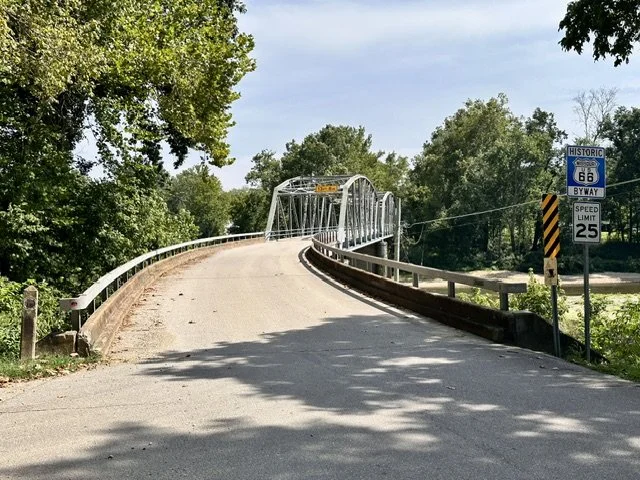
Before Fort Leonard Wood arrived in Pulaski County, Route 66 crossed the Big Piney River on a narrow steel bridge at Devil's Elbow and wound around Hooker Hill much the same way earlier wagon roads had done.
That changed dramatically in 1940 when the federal government selected south-central Missouri as the site for Fort Leonard Wood.
Tens of thousands of workers poured into the region, overwhelming a highway that had never been designed for that volume of traffic. Within months, military planners and highway engineers were looking for a solution.
The solution was ambitious, even by modern standards. Rather than continue around Hooker Hill, engineers decided to blast straight through it.
The result was Hooker Cut, a massive 92-foot-deep limestone pass that was considered the deepest highway cut in the nation at the time.
Fred Weber Construction of St. Louis handled the excavation while additional contractors built a new concrete arch bridge across the Big Piney River and nearly five miles of four-lane divided roadway.
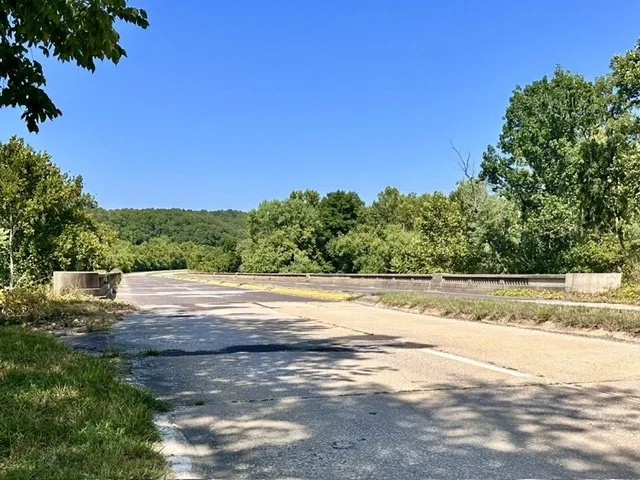
When completed, the project created Missouri's first four-lane section of Route 66. It was a glimpse into the future of American highways, decades before most motorists had ever seen a divided roadway.
Today, the former Route 66 alignment remains open as a local road. The speed limit still reads 55 mph, though some of the pavement repairs suggest the road occasionally fights back.
I found myself treating certain potholes with the same respect usually reserved for wildlife crossings and unexpected railroad tracks.
The limestone walls of Hooker Cut are now heavily covered with vegetation, hiding much of the dramatic terracing that engineers built to catch falling rock.
Likewise, the graceful concrete arch bridge over the Big Piney River continues carrying traffic more than eighty years later, although appreciating its architecture today requires either a carefully chosen viewpoint or a canoe.
Time to Regen: SightSeeEV.com may earn a small commission when you purchase through Amazon or other affiliate links, at no extra cost to you. We only recommend products we trust and use ourselves. Tap 'er lightly! ⚡
EV Road Trip to Hooker Cut and Route 66 Near Fort Leonard Wood
One advantage of driving an EV is that it encourages me to look closer at destinations that might otherwise become quick stops along the Interstate.
Starting from central Missouri, we followed Missouri Highway 17 south toward St. Robert before exploring Hooker Cut, the surviving four-lane Route 66 alignment, and the Big Piney River bridge. What could have been a simple history stop turned into a surprisingly enjoyable afternoon.
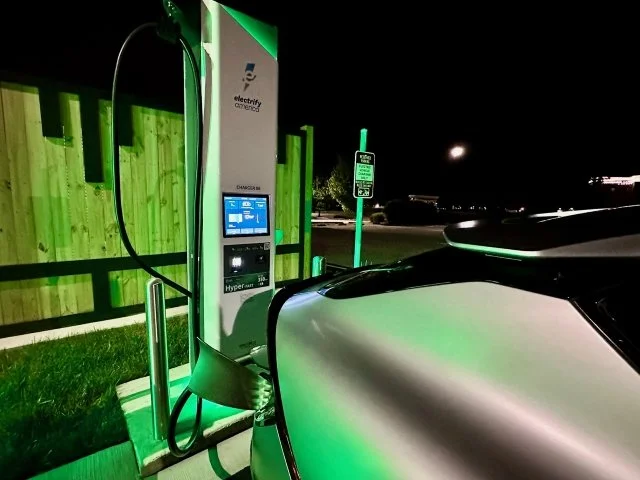
While public fast-charging options remain somewhat limited around Waynesville and St. Robert, nearby communities make the trip easy. Rolla, about 27 miles east, hosts a Tesla Supercharger, while Lebanon, roughly 32 miles west, offers Electrify America fast charging.
In our case, the planning was simple. We charged to 100 percent at home, drove to Pulaski County, explored the area, and returned home with plenty of range remaining.
Amp’d Advice: Sun and Bug Protection are Essential
Always carry the basics when heading out for an adventure.
Bring sunscreen and insect repellent. Missouri's ticks are persistent, and avoiding bites is much easier than dealing with the consequences later.
The round trip reminded me that not every EV adventure requires a meticulously planned charging strategy. Sometimes you can simply point the car toward a historic highway and go.
The drive itself was surprisingly pleasant. Highway 17 rolls through the Ozarks with enough curves to stay interesting and enough small towns to ensure a convenience store appears around the time you're ready for a snack or restroom break.
By keeping our speed near the posted 55 mph limit and letting adaptive cruise control handle most of the work, we averaged about 3.5 miles per kWh.
Not record-setting efficiency, but respectable enough that I wasn't nervously checking the battery percentage on the way home.
Every EV trip starts with PlugShare to research destinations and charging options
Our mantra is simple: we design our route - because adventure shouldn’t be outsourced to a GPS.
Once we pick a destination, I dive into PlugShare for charger intel while Cheryl brings the magic by charting each stop on our paper atlas, giving us a colorful, big‑picture snapshot of the journey.
That blend of EV tech and old‑school wanderlust keeps our planning smooth, colorful, and unmistakably SightSee EV. Check out the full article to see how this combo keeps our road trips smooth and fun!
Birds Eye Review: Why Hooker Cut Is Worth Adding to Your Missouri EV Road Trip
Welcome to Devil's Elbow along historic Route 66 and the Big Piney River
Modern EV road trips often follow the Interstate system, moving quickly between charging stations (more on that here) and major destinations. In the process, it's easy to overlook the roads that made America's transportation network possible.
Hooker Cut represents a fascinating moment when military necessity, engineering innovation, and Route 66 history converged in the Missouri Ozarks.
Engineers abandoned the old philosophy of following the terrain and instead reshaped the landscape itself, creating a highway built for the traffic demands of a rapidly changing nation.
Today, visitors can still drive the same four-lane alignment, pass through the towering limestone cut, and cross the Big Piney River on a bridge originally built to support wartime traffic.
It is both a surviving piece of Route 66 and an early preview of the highway design principles that would eventually lead to the Interstate system.
For EV travelers, the trip is an easy day drive through the Missouri Ozarks and a reminder that some of the best destinations are not found at the end of an Interstate exit ramp.
They are found on the roads that came before.
Hooker Cut remains one of the most important and overlooked pieces of Route 66 history, a place where military necessity helped shape the future of American highways.
Along the Great American Electric Highway, it is a detour well worth making.

John's mission is to help readers see that electric vehicles are simply cars powered by a different energy source, capable of taking us anywhere we want to go.
His favorite way to share that message? Road-tripping along the Great American Electric Highway, where every mile offers an opportunity to visit family, reconnect with friends, and discover America's scenic beauty.
EV Basics

EV Charging

Essential Items


EV Road Trip Planning



After buying an electric car, the most important steps are learning how to charge at home, becoming familiar with public charging stations, understanding how weather affects range, improving driving efficiency, and gradually taking longer trips. These skills help new EV owners build confidence and enjoy their vehicle's full capabilities.