
A Complete Guide to Charging Your Electric Car
Powering the Future of Driving
Plug In and Power Up
Driving an electric vehicle (EV) isn't all that different from driving a gas-powered car, except you'll need to plug it in occasionally.
Think of your EV like a giant smartphone on wheels. You use it every day for commuting, errands, family activities, and road trips. When the battery gets low, you simply recharge it and continue on your way.
For many first-time EV owners, charging is the biggest source of uncertainty. Fortunately, it's far simpler than most people expect.
How and where you charge depends on your lifestyle and location. Over time, you'll develop a routine that works for you, whether that's charging at home, at your apartment complex, at work, or on the road using public charging stations.
With a little planning and practice, charging quickly becomes second nature.
Time to Regen: SightSeeEV.com may earn a small commission if you buy through Amazon or other affiliate links - at no extra cost to you. We only recommend products we trust and use ourselves. Thanks for helping fuel our EV adventures!⚡️
Understanding EV Charger Types
Level 1, Level 2, and DC Fast Charging
There are three primary charging levels, each designed for different situations.
Level 1 Charging
The simplest option, Level 1 charging uses a standard 120-volt household outlet. It typically provides about 3 to 5 miles of driving range per hour of charging.
While it's too slow for many drivers to rely on every day, it's perfect for emergencies, occasional use, or adding a little extra range while visiting friends and family.
Level 2 Charging
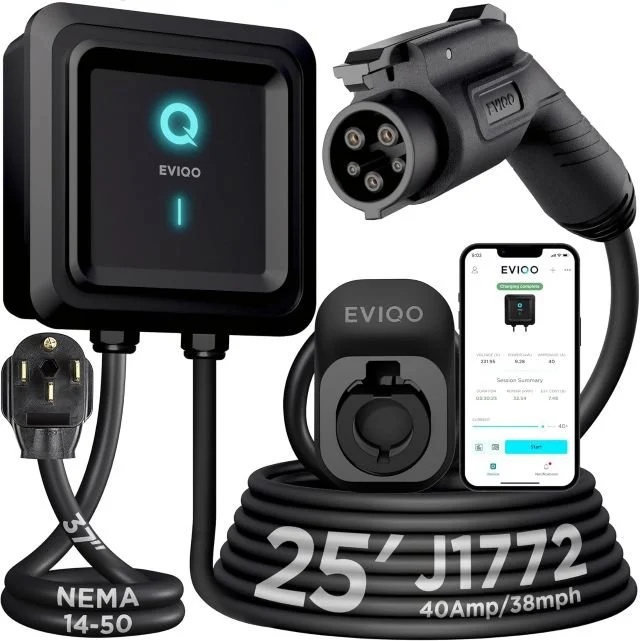
Level 2 charging is the most common solution for EV owners. These chargers use a 240-volt connection and can be installed at home or found at apartment complexes, workplaces, hotels, parking garages, and public destinations.
Most Level 2 chargers deliver approximately 15 to 40 miles of range per hour, making them ideal for overnight charging or topping off while parked for several hours.
DC Fast Charging (Level 3 Charging)
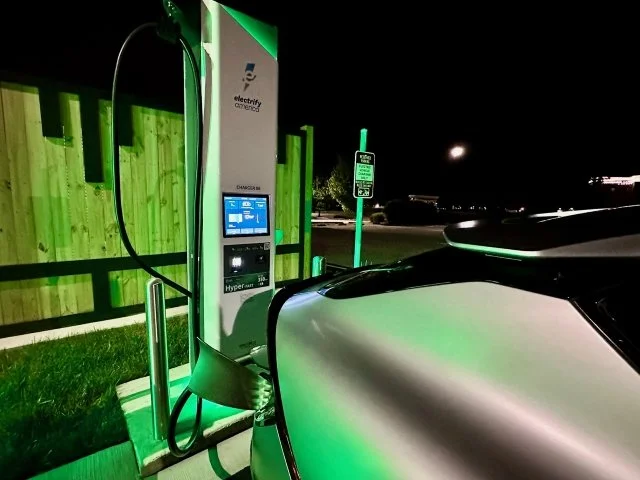
DC Fast Chargers are the heavy hitters of the EV world. These high-powered stations can deliver 50 to 350+ kW of charging power, dramatically reducing charging times.
Many modern EVs can charge from 10% to 80% in about 20 to 40 minutes, depending on battery size, charger output, and weather conditions.
DC Fast Charging is primarily used during road trips and long-distance travel, and these stations are becoming increasingly common across the United States.
Amp’d Advice: Look for Level 2 chargers at museums, botanical gardens, zoos, sporting venues, and other attractions. These destinations often provide enough charging time to add 25 to 50 miles of range while you explore, making your visit even more productive.
Getting Started as a New EV Owner
One of your first decisions as an EV owner is determining how you'll charge regularly.
For most people, the answer is simple: charge at home.
When we purchased our EV, we immediately scheduled the installation of a Level 2 charger. Unfortunately, it took nearly three weeks before the electrician could complete the job.
During that waiting period, I learned how to use public chargers and gained valuable confidence before our home charger was even installed.
Here's what helped:
Download the free PlugShare app and explore the chargers available near you.
Find a nearby charging network and create an account before you need it.
Practice using public chargers close to home.
Learn how payment, charging sessions, and charging speeds work.
Become comfortable with the process before planning longer trips.
In our town, a local hotel hosts a ChargePoint fast charger. We created an account, visited the station several times, and quickly realized charging was much simpler than we expected.
If home charging isn't an option, you'll need a reliable charging plan that includes your workplace, apartment community, nearby public chargers, or a combination of all three.
Hey: A company called Voltpost is building a network of Level 2 chargers that attach directly to existing utility poles, creating a practical charging solution for drivers who park on city streets. This type of infrastructure could become another valuable charging option for EV owners who rely on curbside parking.
Start Small: Sign up for one charging network and use it a few times before expanding to others. ChargePoint is an excellent place to start because the network is easy to use and widely available across North America.
Confidence Comes with Practice: The more often you charge away from home, the more natural the process becomes. Before long, your EV stops feeling like a special project and becomes your everyday vehicle.
Expand to Nationwide Fast Charging: As your confidence grows, you'll likely begin using larger charging networks for travel. We regularly use these major charging networks:
We regularly use these expansive charging networks:
EVgo stations at Pilot Flying J travel centers
IONNA charging stations
Together, these networks make multi-day EV road trips easier than ever. When you're ready to hit the open road, check out our guides to smarter road trip charging and discover how a little planning can make EV travel virtually stress-free.
Planning for Extended Trips
Stress-Free EV Travel
While I enjoy spontaneity, I don't gamble with charging.
Before our first 250-mile round trip to St. Louis, I researched charging locations along Interstate 70 and at our destination. Using PlugShare, we identified an Electrify America station at the Walmart in St. Charles and created an account before departing.
As a result, charging felt routine rather than stressful.
After several successful trips to St. Louis, we gained enough confidence to plan a four-day EV adventure to Northwest Arkansas.
That experience helped us develop our own road trip planning system, which I discuss in this earlier article about planning a successful EV road trip.
Today, route planning takes only a few minutes because we already know which charging networks we trust and where they are located.
The more experience you gain, the easier trip planning becomes.
Tesla Owners Have It Easier
Tesla owners generally enjoy one of the simplest charging experiences available.
The combination of Tesla's extensive Supercharger network and built-in route planning allows drivers to enter a destination and let the vehicle handle most charging decisions automatically.
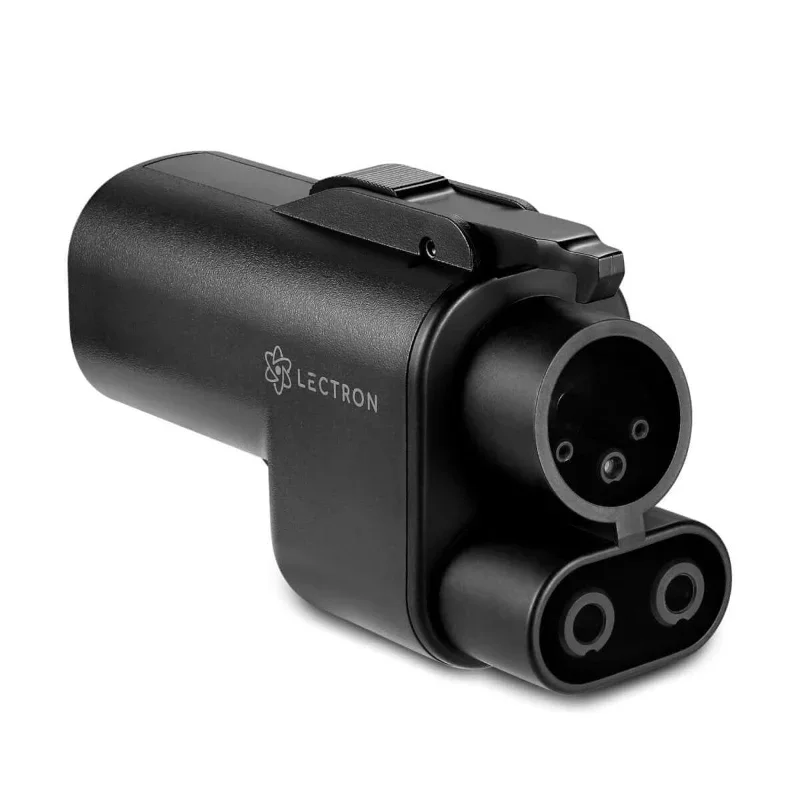
The good news for everyone else is that many non-Tesla EVs can now access portions of the Tesla Supercharger network using NACS adapters and manufacturer-approved charging agreements.
As charging networks continue to expand, road-tripping in a non-Tesla EV becomes easier every year.
If you don't drive a Tesla, be sure to read our article on using Tesla Superchargers with a NACS adapter.
Every EV trip starts with PlugShare to research destinations and charging options
Our mantra is simple: we design our route - because adventure shouldn’t be outsourced to a GPS.
Once we pick a destination, I dive into PlugShare for charger intel while Cheryl brings the magic by charting each stop on our paper atlas, giving us a colorful, big‑picture snapshot of the journey.
That blend of EV tech and old‑school wanderlust keeps our planning smooth, colorful, and unmistakably SightSee EV. Check out the full article to see how this combo keeps our road trips smooth and fun!
Charging Etiquette
Be a Courteous EV Driver
Public charging stations are shared resources, and how we use them affects everyone else's experience.
Practicing good charging etiquette reduces frustration and helps create a welcoming EV community.
Here are a few simple guidelines:
Know your vehicle's charging capabilities. If your EV can't take advantage of the fastest charger, consider leaving it available for vehicles that can.
Don't charge to 100% unless necessary. Charging slows significantly above 80%, especially at DC Fast Chargers.
Move your vehicle when charging is complete. Many charging networks charge idle fees after a grace period.
Don't use charging stalls as parking spaces. If you're not charging, leave the spot available for someone who needs it.
Handle charging equipment carefully. Respect the cables, connectors, and charging stations.
Help new EV drivers. A friendly tip or quick explanation can make someone's first charging experience much less intimidating. A little courtesy goes a long way.
Researching charging options before a trip is a lot like practicing parallel parking. A little preparation builds confidence and helps you avoid stressful situations when you're away from home.
Birds Eye Review: EV Charging Becomes Second Nature
Iriquois Point Lighthouse, Upper Peninsula, Michigan
Charging your EV may feel unfamiliar at first, but most drivers quickly discover that it's much easier than expected.
Remember these key takeaways:
Understand the differences between Level 1, Level 2, and DC Fast Charging.
Use apps like PlugShare to find nearby charging stations.
Practice public charging before your first long-distance trip.
Learn which charging networks serve your area and travel routes.
Follow good charging etiquette and be considerate of other drivers.
The key to successful EV ownership isn't knowing everything on day one. It's building confidence through experience.
Start with local charging, learn the networks available in your area, and gradually expand your comfort zone. Before long, plugging in will feel as natural as filling up at a gas station once did.
Whether you're commuting to work, running errands around town, or embarking on a cross-country adventure, charging is simply another part of the journey.
And once it becomes part of your routine, you'll probably wonder why you were ever worried about it in the first place.

John’s life mission is to educate readers that EVs are simply cars powered by an alternative energy source.
His favorite way to experience it? Road-tripping along the Great American Electric Highway, where the miles turn into opportunities to visit family, reconnect with friends, and soak in the country’s scenic beauty.
EV Basics

EV Charging

Essential Items


EV Road Trip Planning



After buying an electric car, the most important steps are learning how to charge at home, becoming familiar with public charging stations, understanding how weather affects range, improving driving efficiency, and gradually taking longer trips. These skills help new EV owners build confidence and enjoy their vehicle's full capabilities.